


Copper Price Analysis: Decoupling Reality from Market Hype
Wood-Score Insight Box
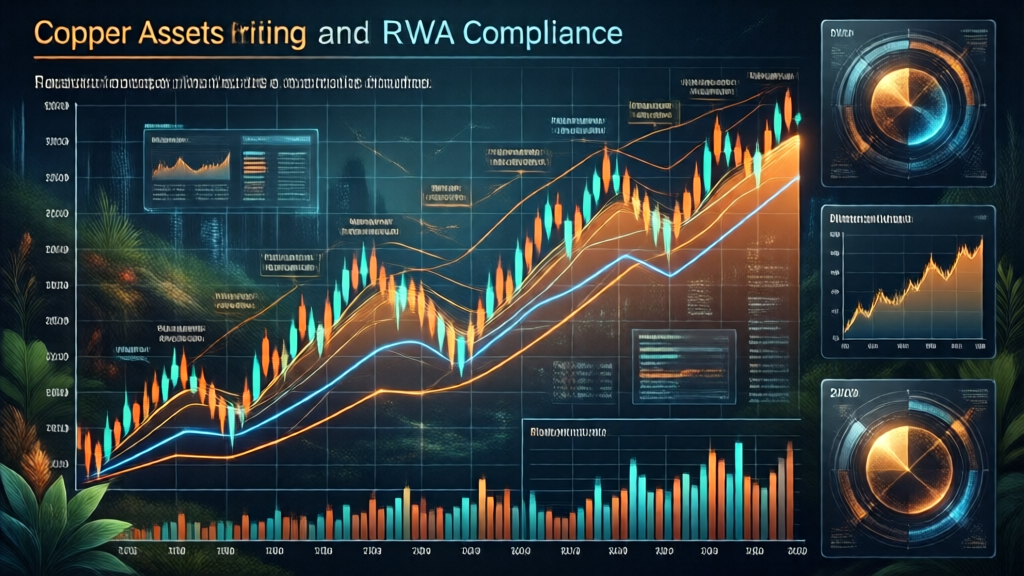
A primary risk for copper-backed tokens lies in the volatility of copper prices and market speculation, necessitating a focus on underlying asset fundamentals.
The Asset Audit
The integrity of copper-backed assets hinges on a solid legal structure, typically organized as a Special Purpose Vehicle (SPV). Such entities are governed by jurisdiction-specific regulations, ensuring that they align with local compliance requirements. Moreover, the due diligence protocols implemented by custodial institutions play a pivotal role in maintaining asset authenticity.
Utilization of satellite imaging and IoT technologies enables real-time monitoring of copper assets, enhancing verification processes. This ensures that the asset represented on-chain accurately reflects physical holdings, which is critical in safeguarding investor confidence.
Wood-Score Insight Box
Weaknesses in verification technologies may undermine asset authenticity; thus, consistent monitoring and audits are essential.
Regulatory Landscape
As of 2026, the landscape governing RWA assets such as copper has evolved with the introduction of MiCA 2.0 regulations. Different jurisdictions impose varying compliance hurdles that can impact funding and liquidity. For example, the EU’s regulatory framework necessitates stringent compliance checks to ensure the legitimacy of asset-backed financial products which, in turn, affects the copper market significantly.
Wood-Score Insight Box
The complex regulatory environment increases operational overhead for copper-backed assets, which could influence market entry and investor decisions.
The Math of Growth
Calculating the expected yields from copper involves assessing projected growth rates against inflationary pressures. The formula for determining annual growth from copper holdings can be represented as:
Yield = (Copper Growth Rate – Inflation Rate) * Investment Amount
Assuming a historical copper growth rate of 3% and an inflation rate of 2%, an investment of $1000 would yield approximately $10 annually before considering deflationary token mechanisms.
Comparison Matrix
| Project | Asset Authenticity | Legal Jurisdiction | Liquidity Depth | Oracle Mechanism |
|---|---|---|---|---|
| Project A | High | EU | Moderate | Manual Verification |
| Project B | Moderate | US | Low | Frequent Updates |
| Project C | Very High | Singapore | High | Automatic Verification |
| Project D | Low | Hong Kong | Very Low | Periodic Checks |
Wood-Score Insight Box
Projects with stronger legal structures and advanced oracle mechanisms tend to exhibit greater stability and investor confidence.
Exit Liquidity Analysis
Understanding the liquidity dynamics of copper assets is crucial, especially during periods of high sell-offs. The conversion time for physical copper into cash can stretch considerably, depending on the liquidity of buyers in the market. Historical trends suggest that during market downturns, a lag in liquidity of 6 to 12 months for large holdings is common, posing a significant risk to investors.
Wood-Score Insight Box
Investors must prepare for liquidity challenges in adverse market conditions, with exit strategies built around realistic timelines.
2026 Edge – The Future of ERC-3643 in Copper
The forthcoming ERC-3643 standard offers permissioned access controls that are tailored for RWA applications in the copper market. This creates an opportunity for regulated transactions that can significantly reduce the risks of fraud and ensure compliance with evolving regulations.
Wood-Score Insight Box
The adoption of ERC-3643 could enhance the security and transparency of copper-backed tokens, appealing to institutional-grade investors.
Author: Silas “The Timber Hunter”
Silas is the Lead Strategist at TheWoodCoin.com. He transitioned from traditional ESG fund management to On-chain RWA auditing in 2021. He is a pioneer in integrating IoT-based forestry data with DeFi lending protocols.


