


RWA + DID: Achieving Private Asset Ownership
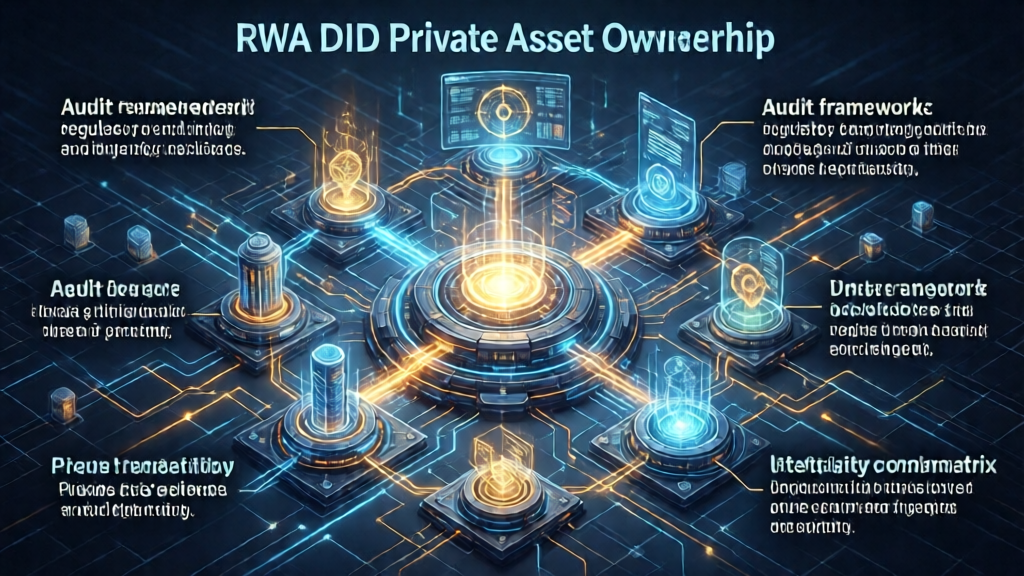
As we advance into the landscape of Real World Assets (RWA) intertwined with Decentralized Identifiers (DID), we observe a critical shift from narrative-driven investment to bottom-line asset audit. This analysis provides an essential framework to assess the valuation logic embedded within RWA projects, ensuring an asset-backed approach in a market often fraught with volatility.
The Asset Audit
The integrity of RWA hinges on the legal frameworks surrounding the underlying assets. In particular, implementing Special Purpose Vehicles (SPVs) with robust custodial institutions et=”_blank” href=”https://thewoodcoin.com/?p=7776″>plays a pivotal role in asset verification. Additionally, advancements in satellite imaging and IoT monitoring allow for continuous oversight of timber growth, thus enhancing the reliability of asset claims. This continuous monitoring addresses the valuation gap between on-chain and off-chain asset evaluations.
Regulatory Landscape
As of 2026, regulatory frameworks such as MiCA 2.0 are becoming increasingly central to RWA deployments. Different jurisdictions like Hong Kong, Singapore, and the European Union present unique compliance thresholds, shaping the operational ethos of RWA projects. Understanding these regulations is essential for investors to navigate potential risks associated with liquidity and ownership verification.
Exit Liquidity Analysis
The speed with which an asset can be liquidated is a critical factor, especially in scenarios where large stakeholders opt to divest. Analyzing the underlying timber asset’s market can yield insights into the expected conversion periods and potential price fluctuations, especially during market turbulence.
The Math of Growth
Based on the biological growth model of timber, if we consider an annual growth rate of 7% and account for a token burn mechanism that reduces supply annually by 2%, the actual yield can be approximated by the formula:
= (7% – 2%) * Asset Value
Comparison Matrix
Asset Authenticity
Legal Jurisdiction
Liquidity Depth
Oracle Mechanism
Verified through SPV and IoT
Complex cross-border regulations
Access to secondary markets varies
Reliability hinges on verification frequency
Utilizes community-driven audits
Emerging frameworks present opportunity
Limited by market demand
Frequency susceptible to market conditions
e>
2026 Edge
With the adoption of ERC-3643 standards, there is notable improvement in asset management and permissions within RWA frameworks. The integration of these standards with DID technologies enables far stronger ownership structures, making it easier for stakeholders to verify claims about their entitlements, irrespective of market et=”_blank” href=”https://thewoodcoin.com/?p=7778″>movements.
Final Thoughts
Investors venturing into RWA supported by DID technologies must focus on the underlying asset’s characteristics, how they are audited, and the liquidity provisions available. With an informed understanding of these elements, one can mitigate risks associated with volatile markets while taking advantage of the inherent value in tangible assets.


