


Yield Comparison: RWA Tokenization vs. Traditional Trust Funds
As the landscape of asset management evolves, a critical evaluation of yield potential from RWA tokenization versus traditional trust funds reveals fundamental insights regarding asset integrity and investor returns. While both avenues promise financial benefits, the underlying audit, legal structures, and market mechanisms define the true yield potential in this investment paradigm.
The Math of Growth
Based on the biological growth model for timber assets, a comprehensive yield analysis can be crafted. The formula involves calculating the expected growth rate of timber, typically around 2-5% annually, and adjusting for a token deflation rate linked to market adoption.
Yield = (Growth Rate – Token Deflation Rate) x Timber Volume
The Asset Audit
The legal framework for RWA projects often involves Special Purpose Vehicles (SPV) to compartmentalize asset risks. These SPVs are held by custodians who implement surveillance technologies like satellite imaging and IoT devices to ensure the integrity of the timber assets. This acquisition of real-world data provides an assurance that the tokenized representation on the blockchain remains above board.
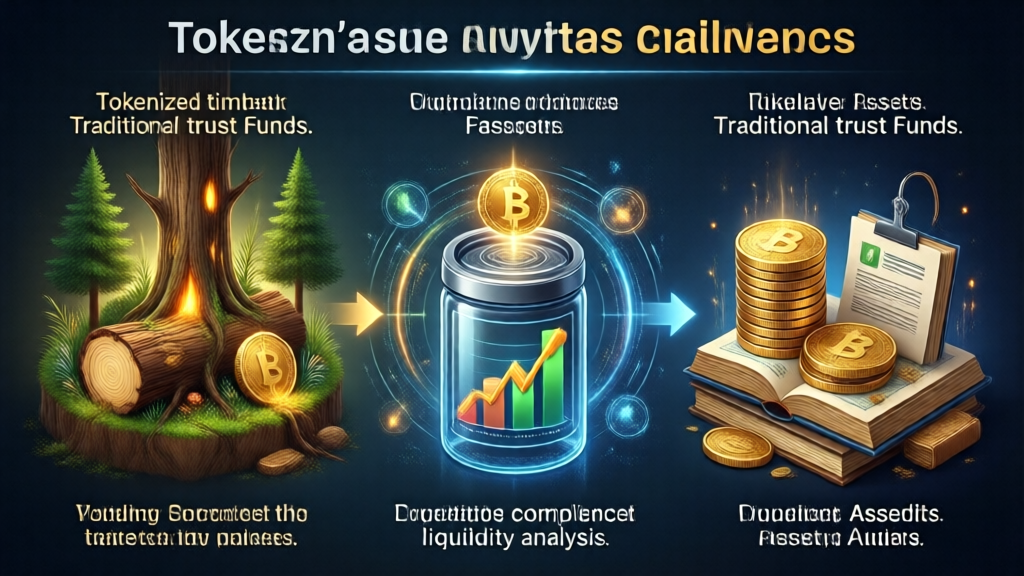
Comparison Matrix
Criteria
RWA Tokenization
Traditional Trust Funds
Notes
Asset Authenticity
Verified by IoT and satellite data
Standard audit practices
Integration of technology provides enhanced verification.
Legal Jurisdiction
Supports decentralized regulations
Strict compliance requirements
Jurisdictional differences can affect yield.
Liquidity Depth
Market-dependent
Generally well-established
Liquidity can critically enhance or restrict exit options.
Oracle Mechanism
Smart contract triggers
N/A
Veracity of data feeds can greatly impact yield.
e>
Regulatory Landscape
The RWA sector is navigating through a complex regulatory terrain. The emergence of policies such as MiCA 2.0 suggests an increasing recognition of tokenized assets in Europe, which could lead to a more structured compliance environment. This is critical for future yield assessments as it establishes a clearer legal framework around asset tokenization.
Exit Liquidity Analysis
When analyzing large-scale liquidations in tokenized assets, the conversion to cash tied to physical timber assets could take as long as several months due to market conditions and asset liquidity. Understanding this cycle is essential for investors to manage their risk effectively.
The 2026 Edge
As we project towards 2026, technical innovations including ERC-3643 standards for yield tokenization provide a framework for superior access control and greater transparency. This trend merits investor attention as regulatory compliance continues to shape the investment landscape.
As an investor, the decision between RWA tokenization and traditional trust funds should be grounded in the thorough audit of the underlying assets. The yield produced from these avenues should reflect the reality of their underlying biological, economic, and regulatory contexts, rather than speculative market et=”_blank” href=”https://thewoodcoin.com/?p=7778″>movements.
For more insights on RWA dynamics, consider subscribing to TheWoodCoin: Weekly RWA Insight Report.


