


Introduction
With over $4.1 billion lost to DeFi hacks in 2024 alone, the need for secure blockchain solutions has never been more critical. This surge in vulnerability highlighted the importance of adopting more secure consensus mechanisms, and one prominent contender is Proof of Stake (PoS). Not only does PoS enhance security, but it also significantly reduces the energy consumption associated with traditional Proof of Work (PoW) systems.
This article aims to explore the Proof of Stake benefits and shows why it is swiftly becoming the preferred consensus mechanism in the crypto marketplace, including a look at how it specifically benefits markets like Vietnam, where crypto adoption is on the rise.
What is Proof of Stake?
Proof of Stake is a blockchain consensus mechanism that allows validators to create new blocks and confirm transactions based on the number of coins they hold and are willing to “stake” as collateral. Unlike Proof of Work, which relies on mining and energy-intensive computations, PoS eliminates the need for high power consumption while simultaneously enhancing the security of the network.
How Does Proof of Stake Work?
- Staking: Users lock their tokens in a specific wallet to participate in the network.
- Validator Selection: Validators are chosen based on the amount of cryptocurrency they hold and are willing to stake.
- Transaction Validation: Selected validators verify transactions and create new blocks.
This introduces a more democratic approach to blockchain validation and contributes to a more decentralized network.
Key Benefits of Proof of Stake
Want to know why PoS is making waves in the crypto industry? Let’s dive into its primary advantages:
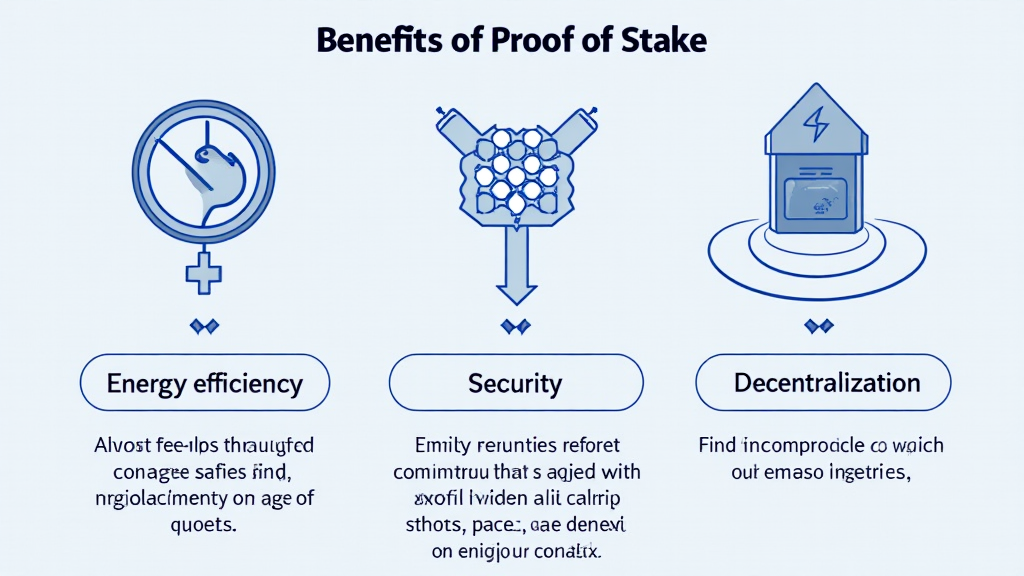
1. Energy Efficiency
One of the most significant advantages of Proof of Stake is its drastic reduction in energy consumption.
By removing the complex computing tasks required for mining, PoS allows the blockchain to operate using as little as 1% of the energy used by traditional PoW systems. This shift not only makes PoS more environmentally friendly but also contributes positively to the sustainability of blockchain technology as a whole.
2. Enhanced Security
While PoW blockchain networks face attacks through mining power, PoS can be more resilient to such threats. Validators have to stake their tokens, meaning if they act dishonestly, they will lose their staked cryptocurrency. This makes it economically unfeasible for them to attempt fraud, adding an additional layer of security.
3. Decentralization
Another perk of PoS is that it can lead to greater decentralization:
Unlike PoW systems where mining power often consolidates into large pools, PoS allows for a wide distribution of validator nodes. This makes the network less vulnerable to centralized attacks and promotes a healthier ecosystem.
4. Accessibility and Participation
In PoW systems, the need for expensive hardware can act as a significant barrier to entry for many potential validators. In contrast, PoS allows users who might not have access to powerful mining rigs to participate in securing and validating the network. Users in regions like Vietnam can easily stake their tokens using basic computers or even mobile devices, encouraging broader participation.
5. Economic Incentives
Through staking rewards, participants can generate passive income simply by holding onto their funds. This economic model aligns participants’ interests with the overall health of the network—users earn more when the network thrives. As a consequence, this creates a robust ecosystem that benefits everyone involved.
The Rise of Proof of Stake in Vietnam
Vietnam has been witnessing a significant uptick in the adoption of cryptocurrencies, with a user growth rate of over 23% in just the past year. As more Vietnamese investors flock to cryptocurrencies, the benefits of PoS become more apparent.
Many local projects are shifting towards Proof of Stake due to its lower operational costs and environmental benefits, catering to a more eco-conscious community. As the market matures, we may see a surge in PoS-based projects across Vietnam.
Comparison of Proof of Work vs. Proof of Stake
| Feature | Proof of Work | Proof of Stake |
|---|---|---|
| Energy Consumption | High | Low |
| Hardware Requirement | Specialized equipment needed | Standard computers or mobile phones |
| Security | Vulnerable to 51% attacks | Stakers lose money if they act dishonestly |
| Decentralization | Can be centralized in mining farms | Encourages wider participation |
As evident from the table, Proof of Stake offers numerous advantages that can drive blockchain technology forward, particularly in emerging markets.
Conclusion
As we look toward the future of cryptocurrency and blockchain technology, the benefits of Proof of Stake present a compelling case for wider adoption. Its energy efficiency, enhanced security, broad accessibility, and ability to foster decentralization are qualities essential for the growth of this space.
Vietnam’s increasingly active crypto community stands to gain significantly as the nation embraces innovative solutions like PoS. As we explore this transformative shift, it’s clear that Proof of Stake is not just a trend; it’s a pillar of the crypto revolution.
To learn more about using blockchain securely and effectively, please check out hibt.com, where you can find additional resources and guidance.
Author: Dr. Rebecca Tran – A leading expert in blockchain security with over 15 publications in the field and influential in auditing several high-profile projects globally.


