


Unlocking Crypto Total Return Swaps: A Guide for Investors
With over $4.1 billion lost to hacks in the decentralized finance (DeFi) space in 2024, investors are now looking for innovative financial instruments that can maximize returns while minimizing risks. In this evolving landscape, Crypto Total Return Swaps (TRSs) have emerged as a strategic solution. This article will delve into the intricacies of Crypto TRSs, their mechanisms, benefits, and their implications in the rapidly expanding crypto market.
What Are Crypto Total Return Swaps?
To understand Crypto Total Return Swaps, let’s simplify the concept. A Total Return Swap is a financial contract in which one party agrees to pay the total return of an asset, which includes both capital gains and income, to another party. In return, the second party pays a fixed or floating rate.
For cryptocurrency, this means that an investor can gain exposure to a digital asset without directly owning it. This is akin to renting a digital asset – you get all the benefits without the usual risks of ownership. The integration of TRSs into the crypto world has opened doors for investors to access cryptocurrency markets without actually buying the assets themselves.
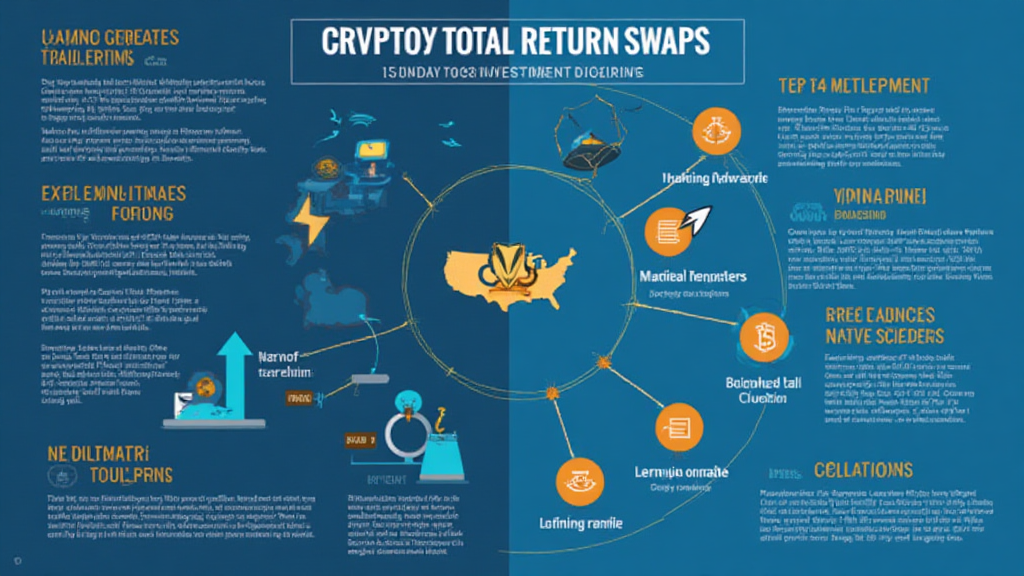
How Do Crypto Total Return Swaps Work?
Understanding the mechanics of Crypto TRSs is crucial for leveraging them effectively. Here’s how they work:
- Contract Agreement: Two parties enter into a contract regarding a specific crypto asset.
- Paying Returns: One party agrees to pay the total return (price appreciation plus dividends, if any) on the underlying digital asset.
- Stable Payments: The other party pays either a fixed or variable amount each period as specified in the contract.
This system allows for a number of uses, including speculation, hedging risks associated with cryptocurrency investments, and increasing leverage without directly acquiring asset holdings.
The Benefits of Crypto Total Return Swaps
Investing using Crypto Total Return Swaps can provide various significant advantages:
- Leverage: Investors can gain exposure to a larger position than their initial capital allows.
- Risk Management: TRSs can hedge against declines in the asset’s value, providing a safety net.
- Diversification: Allows investors to gain exposure to multiple cryptocurrencies without the need for purchasing each individually.
- Tax Efficiency: Depending on jurisdiction, TRSs can offer more favorable tax treatment compared to direct ownership of the assets.
Real-World Applications of Crypto TRSs
As the landscape of digital currency continues to expand, the applications of Crypto Total Return Swaps are becoming increasingly relevant. Here are some examples:
- Institutional Investments: Major institutions use TRSs to gain exposure to cryptocurrencies while managing their risk exposure.
- Hedging Strategies: Funds can hedge their portfolios against volatility by entering into TRSs.
- Passive Income: Investors can receive returns from TRSs without the need to actually manage their crypto assets.
Challenges and Risks Associated with Crypto Total Return Swaps
While there are many benefits to Crypto TRSs, certain risks and challenges exist that must be considered:
- Counterparty Risk: There’s always the risk that the other party in the swap may default.
- Market Risks: If the underlying asset’s value decreases significantly, it can lead to large losses upon settlement.
- Regulatory Risks: Restrictions or regulations regarding derivatives may affect how TRSs can be used.
Crypto TRS Market Overview: A Data Perspective
As of early 2025, the growth of Crypto Total Return Swaps has been substantial. Recent reports suggest that the market for crypto derivatives has exploded, with total trading volumes reaching approximately $25 billion in Q1 alone, indicating strong interest in financial instruments like TRSs.
| Quarter | Trading Volume (USD) |
|---|---|
| Q1 2025 | $25 billion |
| Q4 2024 | $15 billion |
Source: Chainalysis
Overcoming Challenges with Crypto Total Return Swaps
To deal with the challenges posed by Crypto TRSs, investors should adopt specific strategies:
- Conduct Thorough Due Diligence: Always research and verify the credibility of parties involved in the TRS.
- Leverage Technology: Use automated trading platforms that offer real-time risk analytics.
- Regulatory Compliance: Stay updated on regulatory developments related to derivatives in your locality to avoid legal pitfalls.
Conclusion: The Future of Crypto Total Return Swaps
In a world where volatility reigns, Crypto Total Return Swaps offer investors a pathway to manage risks while gaining exposure to the digital asset revolution. By understanding the benefits and drawbacks of TRSs, you can better navigate the crypto landscape. As we move forward, staying informed and engaging with credible platforms like thewoodcoin will be essential for capitalizing on future opportunities in the market.
Whether you are an institutional investor or an individual looking to diversify your portfolio, embracing innovative financial tools such as Crypto TRSs may well be the key to achieving significant returns in the ever-evolving crypto ecosystem.
Author: Alex Walker, a financial analyst with over a decade of experience in blockchain technologies and derivatives. Having published over 25 papers in the fintech space and led audits for some notable projects, Alex is well-versed in the complexities and dynamics of crypto investments.


