

Introduction
As the decentralized finance (DeFi) sector continues to evolve, understanding the governance mechanisms behind Decentralized Autonomous Organizations (DAOs) is crucial. In 2024 alone, over $4.1 billion was reported lost due to various hacks in the DeFi space, highlighting the need for robust governance and security frameworks. But, how do we ensure that these funds are protected? This article delves into DAO governance models, exploring their importance, advantages, and operational mechanisms.
Understanding DAO Governance
At its core, a DAO operates through smart contracts on a blockchain, allowing community members to participate in decision-making processes. The decentralized nature of these organizations offers a unique perspective on how decisions are made, contrasting sharply with traditional centralized frameworks. Let’s break down the different types of governance models prevalent in the crypto ecosystem.
Token-Based Governance
The most common form of governance in DAOs is token-based governance. In this model, the ownership and vote weight are directly proportional to the number of tokens held.
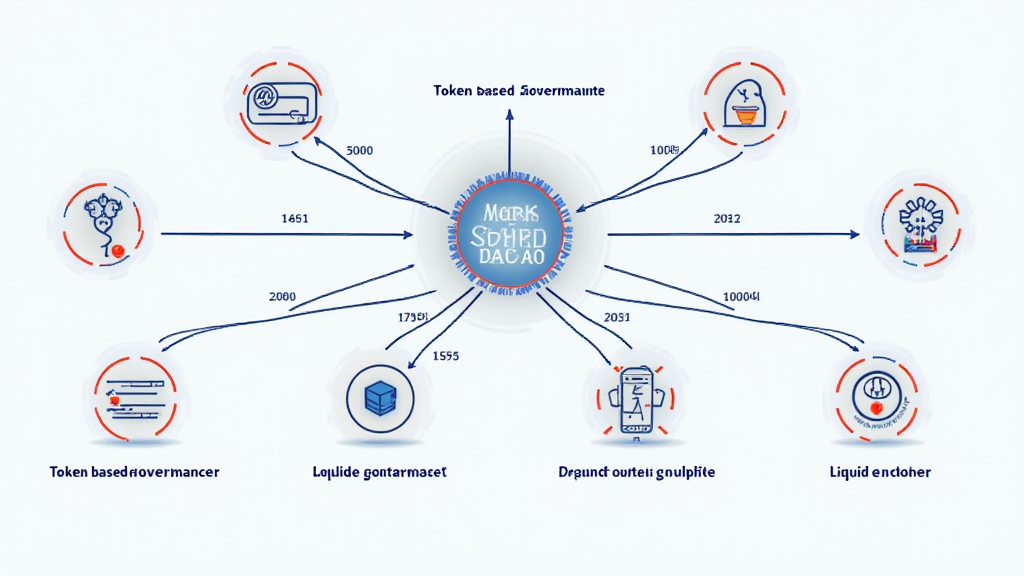
- Advantages: Aligns incentives with ownership; encourages token holders to participate in governance.
- Disadvantages: Centralizes power among wealthy token holders, potentially undermining the democratic nature of governance.
For instance, in a DAO like MakerDAO, the governance token (MKR) allows holders to vote on crucial protocol decisions, from risk parameters to developmental funding.
Quadratic Voting
Quadratic voting is an innovative approach aimed at mitigating the concentration of power within token-based models. Here’s how it works: voters are given a set number of votes, but the cost of each additional vote increases quadratically.
- Benefits: Renders influence more equitable by making it costly to dominate through capital alone.
- Challenges: Complexity can deter participation; may require robust auditing systems to ensure fairness.
Imagine a community deciding on the future direction of their project; instead of simply counting tokens, more nuanced decisions can be made that reflect a broader consensus.
Liquid Democracy
Liquid democracy combines direct and representative democracy principles. Token holders can either vote directly or delegate their voting power to a representative.
- Advantages: Flexibility and expertise — users can choose representatives who are knowledgeable about specific issues.
- Disadvantages: The potential for manipulation and lack of accountability in representatives.
This model is akin to electing a concierge who then makes decisions on behalf of a larger group—it allows for informed choices without overwhelming everyone with technical details.
Real-World DAO Governance Examples
Understanding DAO governance is easier when examining real-world examples. Let’s take a look at some significant DAOs and their unique governance strategies:
MakerDAO
As one of the most prominent DAOs, MakerDAO governs the DAI stablecoin. Token holders engage in governance through MKR tokens, which they use to vote on system parameters and changes.
Compound Governance
Compound’s governance model operates similarly, allowing token holders to propose and vote on protocol alterations. Their approach emphasizes transparency and community involvement in decision-making.
Aave DAO
Another key player, Aave, integrates community feedback actively. Its governance powers lie within AAVE token holders, who can influence significant financial decisions impacting the platform.
Challenges of DAO Governance
Even with innovative governance structures, DAOs face several challenges that can hinder their effectiveness:
- Voting Coordination: Achieving widespread participation in votes can be challenging, particularly for complex decisions.
- Power Concentration: High token holders may dominate decision-making, diluting the voice of smaller participants.
- Security Risks: As evidenced by the overwhelming number of hacks in recent years, governance systems need to prioritize security from the outset.
Addressing these challenges is key to fostering robust and resilient DAO ecosystems.
The Future of DAO Governance
With the growing landscape of blockchain technology and an increased user base in places like Vietnam—where surveys indicate a 25% annual growth in cryptocurrency adoption—DAOs present a promising model for decentralized governance. As we look towards 2025, innovation in DAO governance models is inevitable. Expected trends include:
- Hybrid Governance Models: Combining various governance techniques to develop a balanced approach.
- Regulatory Adaptations: As DAOs become more mainstream, adapting to regulatory frameworks will be necessary.
- Enhanced Community Engagement: Finding ways to involve all stakeholders meaningfully, regardless of token holdings.
These developments will likely shape how DAOs operate, paving the way for more democratic and transparent governance practices.
Conclusion
In conclusion, DAO governance models play a crucial role in shaping the future of decentralized systems. By understanding the mechanisms behind these models, communities can make informed choices that prioritize security and engagement. As we navigate this progressive landscape, platforms like thewoodcoin will continue to provide valuable insights into DAO governance, guiding users towards making informed decisions in their crypto journeys. Stay tuned as we explore the evolving nature of blockchain governance and its implications for users worldwide.


