

Blockchain Scalability Solutions: Navigating the Future of Crypto
In 2023, the cryptocurrency market faced severe challenges, with $4.1 billion lost to DeFi hacks. This staggering figure underscores the necessity of enhanced blockchain scalability solutions to elevate security and efficiency. Vietnam, with its rapidly expanding user base and tech-savvy population, represents a promising market for blockchain innovations.
As we explore blockchain scalability solutions, it’s crucial to understand the balance between decentralization, security, and speed. In this guide, you will learn about various scaling methods, real-world implementations, and their implications for both developers and users.
Understanding Blockchain Scalability
Blockchain scalability refers to the ability of a blockchain network to handle increased transactions and data without compromising performance. With the collective growth of cryptocurrencies, the demand for efficient transaction processing has skyrocketed.
- Transaction Throughput: This measures how many transactions a network can process per second. Bitcoin handles about 7 transactions per second (TPS), while Ethereum can manage around 30 TPS. However, other blockchains such as Solana boast close to 65,000 TPS.
- Network Latency: This is the delay before a transaction is confirmed on the blockchain. A high latency can discourage users from adopting the technology.
- Decentralization vs. Centralization: Scalability often requires compromises. While increased efficiency usually leads to centralization, true blockchain potential thrives on a decentralized structure.
Layer 1 Solutions
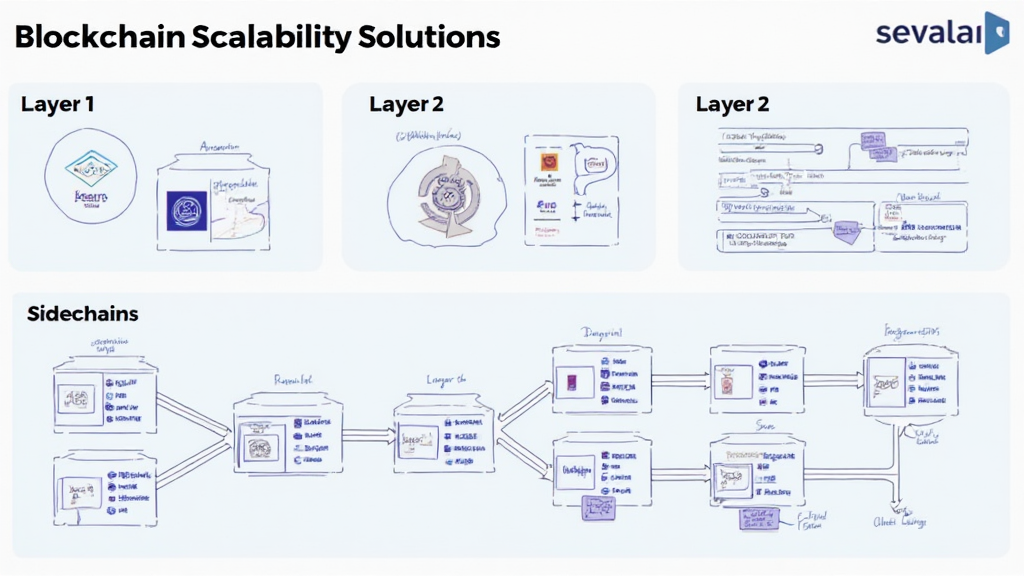
Layer 1 solutions involve modifications to the existing blockchain protocol. These changes aim to enhance transaction speed and reduce costs without altering the network’s fundamental structure.
- Change in Block Size: By increasing the size of blocks, networks can accommodate more transactions in each block. For instance, Bitcoin Cash increased its block size from 1MB to 32MB, allowing for a higher TPS.
- Consensus Mechanism Optimization: Transitioning from Proof of Work (PoW) to more efficient methods like Proof of Stake (PoS) reduces energy consumption and enhances speed. Projects like Ethereum 2.0 are applying this approach.
Layer 2 Solutions
Layer 2 solutions serve as secondary frameworks built on top of existing blockchains, facilitating faster and cheaper transactions. They aim to alleviate the load on Layer 1 protocols.
- State Channels: This allows transactions to occur off-chain before finalizing on-chain, optimizing speed. Examples include the Lightning Network for Bitcoin.
- Sidechains: These are separate blockchains that run parallel to the main chain, allowing for customized and faster transactions.
- Rollups: Rollups process transactions outside the main blockchain and provide proofs to the base layer, significantly improving scalability. Both ZK-Rollups and Optimistic Rollups are gaining traction.
Real-World Implementation: Vietnam’s Growing Market
Vietnam is rapidly emerging as a blockchain powerhouse with a notable user growth rate of 83% in 2022. This growth drives the demand for efficient blockchain scalability solutions.
- Adoption in Finance: Vietnamese financial institutions are exploring blockchain for cross-border payments, enhancing transaction speed and security.
- Smart Contracts Usage: With the rising popularity of smart contracts, auditing has become essential. Businesses should understand how to audit smart contracts to ensure security.
Future of Blockchain Scalability: What’s Next?
Looking ahead to 2025, significant advancements will likely emerge in cycling through various scalability solutions. Decentralized finance (DeFi) applications will continue dominating this landscape.
- Emerging Technologies: Future blockchain platforms may integrate Artificial Intelligence (AI) to improve transaction speed and security.
- Cross-Chain Solutions: As different blockchains work together, solutions that allow inter-blockchain communications will enhance scalability.
In conclusion, the future of Blockchain scalability solutions holds promise for developers and users alike. By exploring Layer 1 and Layer 2 solutions, leveraging local market potential in Vietnam, and tackling real-world challenges, the cryptocurrency landscape can evolve towards efficiency and inclusivity.
For more in-depth cryptocurrency strategies, visit hibt.com.
**Please note:** This information is not financial advice; consult local regulators for compliance.
Written by Dr. Alex Tran, a recognized blockchain expert with over 15 published papers in the cryptocurrency domain and notable contributions to the Audit of Smart Contract Projects.


