


Crypto Technical Analysis: Mastering Market Insights
In the ever-evolving world of cryptocurrencies, understanding market trends is crucial. With a staggering $4.1 billion lost to DeFi hacks in 2024, savvy investors are honing their technical analysis skills to avoid pitfalls and seize opportunities. So, how can you enhance your crypto trading strategies using technical analysis?
Understanding the Basics of Crypto Technical Analysis
Technical analysis (TA) involves analyzing price movements and trading volumes to forecast future market behavior. Unlike fundamental analysis, which examines the intrinsic value of assets, TA focuses solely on market sentiment and historical price charts.
- Price Charts: These are graphical representations of a cryptocurrency’s price over time, providing insights into trends and patterns.
- Trading Volume: This metric indicates the amount of a cryptocurrency traded within a specific period, serving as a confirmation of price trends.
- Market Sentiment: Utilizing various indicators, traders assess whether the market is predominantly bullish or bearish.
Key Indicators Used in Technical Analysis
Certain indicators have become staple tools in the toolkit of every crypto trader. They help quantify emotions and trends through mathematical computations.
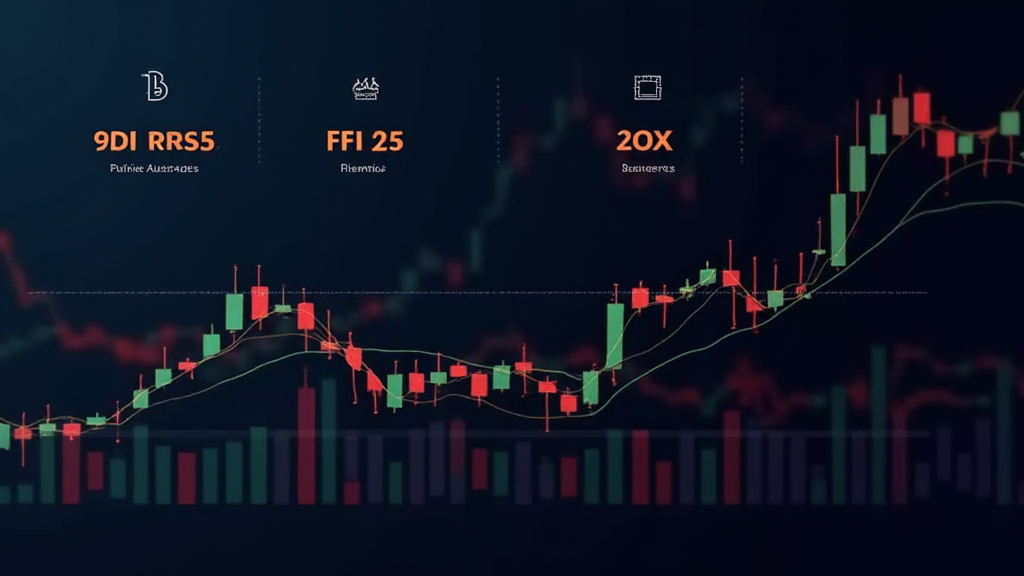
- Moving Averages (MA): These smooth out price data to identify directional trends. The Simple Moving Average (SMA) and Exponential Moving Average (EMA) are commonly used.
- Relative Strength Index (RSI): This momentum oscillator measures the speed and change of price movements. Values over 70 suggest overbought conditions, while below 30 indicates oversold levels.
- Bollinger Bands: These consist of a middle band (SMA) and two outer bands which represent volatility. When prices touch the upper band, it signifies an overbought situation, and vice versa for the lower band.
Identifying Market Trends: Bullish vs Bearish
Recognizing whether the market is experiencing a bullish or bearish trend is essential for traders. This involves examining price action and relevant indicators.
Let’s break it down:
- A Bullish Trend is characterized by higher highs and higher lows. The 50-day SMA is above the 200-day SMA, indicating upward momentum.
- A Bearish Trend shows lower highs and lower lows, with the 50-day SMA falling below the 200-day SMA, suggesting weakening prices.
Support and Resistance Levels
Support and resistance levels are critical price points that signal potential buying or selling opportunities. Support refers to the price level where a downtrend can be expected to pause due to a concentration of demand, while resistance is the level where a rally can pause due to selling pressure.
Example:
- Support Level: When Bitcoin dropped to $30,000, this became a crucial support level as buying interest emerged at that price.
- Resistance Level: Conversely, when Bitcoin surged to $40,000, this level served as a resistance point where new selling began.
Utilizing Technical Analysis in Trading Strategies
Now that we’ve covered the basics, how can you apply technical analysis to formulate potent trading strategies?
One effective method is the Risk-to-Reward Ratio approach:
- Identify your entry point using indicators.
- Determine your stop-loss (the maximum loss you’re willing to tolerate) based on support levels.
- Set your profit target by analyzing resistance levels, targeting at least a 1:2 risk-to-reward ratio.
Case Studies: Successful Implementation of Technical Analysis
Analyzing the price action of successful trades reveals that technical analysis can lead to substantial gains. A notable example includes the price increase of Ethereum during the DeFi boom, where savvy traders utilized TA to capture 250% returns.
According to Chainalysis in 2025, the increase in retail investor participation has grown by 56% in Vietnam, highlighting the importance of effective trading strategies.
Local Market Insights: Vietnam’s Cryptocurrency Landscape
The cryptocurrency market in Vietnam is burgeoning, with user growth rates skyrocketing. Vietnam now ranks among the top countries in crypto adoption globally, with a significant demographic of youthful investors eager to engage in trading.
By conducting thorough technical analysis, investors in Vietnam can leverage market opportunities to maximize their returns. As local investors evaluate the market, they can utilize pivotal insights like:
- Growth rate of crypto transactions in Vietnam increased by 150% in the past year.
- The emergence of DeFi projects has raised concerns about security, emphasizing the need for risk assessment tools.
Auditing Smart Contracts: An Essential Skill for Investors
As the crypto landscape evolves, understanding how to audit smart contracts is a vital skill. It prevents potential losses from flawed contracts.
For those wondering how to audit smart contracts, follow these steps:
- Conduct a code review of the contract.
- Utilize automated tools for vulnerability detection.
- Test the contract on the mainnet for real-world scenarios.
The Future of Technical Analysis in Crypto Trading
As technology advances, the tools and indicators available for technical analysis are expected to improve. Looking forward, incorporating AI-driven analytics will provide traders with deeper insights and more accurate predictions.
Investors need to stay updated on 2025’s most promising altcoins while applying robust technical analysis strategies to navigate the changing market effectively.
Conclusion
Mastering crypto technical analysis is essential for anyone looking to thrive in the digital asset landscape. As you develop your skills in analyzing price movements and market trends, remember that a disciplined approach with clear entry and exit strategies will serve you well.
Ultimately, the combination of technical tools and local market insights will empower you to make informed trading decisions. Remember to approach every trade with caution and continuous learning.
For further insights and expert opinions, check out thewoodcoin. By leveraging cutting-edge analysis and tools, you can position yourself for success in 2025 and beyond!
By: Dr. Minh Tran, a crypto analyst with over 15 published papers in blockchain technology and a leader in auditing notable crypto projects.


